

CMS Releases 2027 Medicare Advantage Agent Commissions
CMS has officially released the CY2027 Medicare Advantage compensation maximums, and agents will see another increase heading into the 2027 plan year. But the dollar figures aren't the real story, why they went up is.
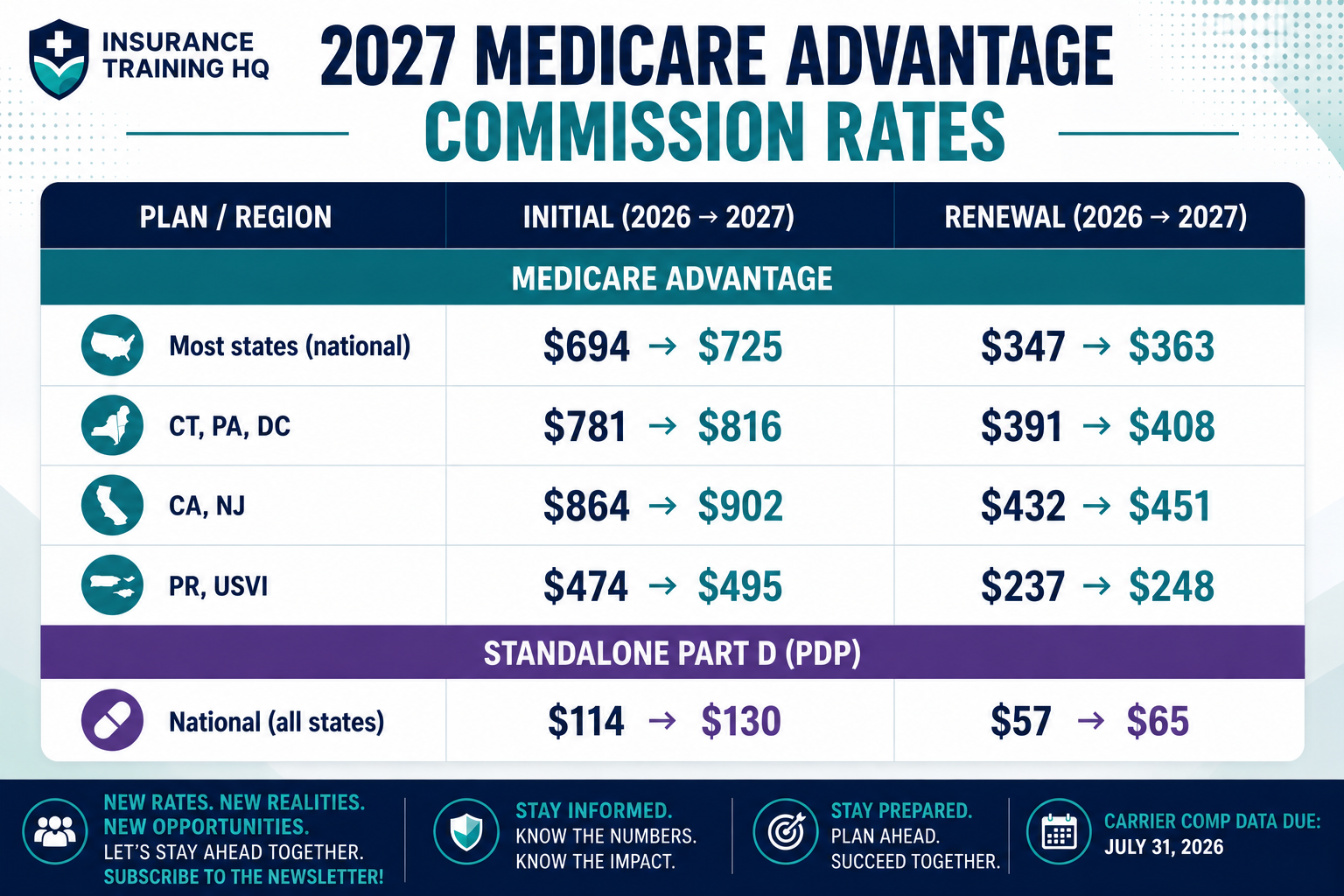
The 2027 Rates
These are the maximums carriers can pay. Medicare Advantage rates vary by region; standalone Part D (PDP) is a single national rate.
The picture displays the 2026 alongside 2027 commission rates so you can see the change.
For Medicare Advantage, the national rate rises +$31 on initial enrollments (about +4.5%) and +$16 on renewals (about +4.6%), with a roughly comparable bump across every region. Part D moves up more sharply in percentage terms — initial PDP commission climbs from $114 to $130 (about +14%), with renewals at half that, $65. If those PDP numbers hold, it's a notably bigger raise than MA saw, and worth a second look at your standalone Part D book heading into AEP.
At first glance, this looks like a routine annual bump. It mostly is, but the reason it's a bump at all is worth understanding.
The Backstory: A Court Ruling Reset the Formula
In August 2025, a federal court vacated key parts of CMS's 2025 rule that had changed how broker compensation is calculated. The government chose not to appeal. As a result, CMS reverted to the pre-2025 methodology for setting 2027 rates.
In plain terms: the $725/$363 figures reflect the old fair-market-value formula doing what it always did — adjusting upward with inflation. This isn't CMS handing agents a raise. It's the prior calculation method being restored after litigation, and that method happens to produce a modest increase.
Unless there's another legal ruling, these rates and this methodology are expected to hold through the 2027 plan year.
Compensation Is Still Being Watched
None of this means the scrutiny is over.
CMS sought industry feedback on agent and broker compensation during the 2025 rulemaking process and continues to collect additional information regarding how carriers structure agent compensation. As the agency gains more visibility into compensation practices across the industry, future policy discussions around commissions, plan steering, and beneficiary protections may continue.
The Distribution Model Is Shifting
Alongside the rate news, many carriers and agencies appear to be rethinking how Medicare products are distributed.
The aggressive tele-sales expansion of the past several years has drawn regulatory pressure, compliance scrutiny, and consumer pushback. In response, a number of organizations seem to be leaning back toward local field agents and relationship-based selling.
It's an understandable shift. Beneficiaries often value a trusted advisor they can sit across from, ask questions, and stay connected with long after enrollment. For agents who build that kind of presence, this may open new opportunities.
Agent Takeaway
Now is a good time to review your contracts, your compensation structure, and your longer-term strategy:
Verify your numbers. As carriers publish 2027 contracts, confirm your initial and renewal rates line up with the maximums for your region.
Watch the deadlines. Carrier compensation data must be submitted by July 31, 2026, and becomes public on CMS.gov before AEP.
Consider your model. If you operate primarily as a tele-sales agent, it's worth evaluating whether a field-based presence fits your market.
Don't confuse the comp memo with the Final Rule. The CY2027 Final Rule carries separate operational changes (SOA timing, event rules, and more) that deserve their own review.
The Medicare landscape keeps shifting. The agents who understand why the rules move — not just that they moved — are the ones who position themselves best.